
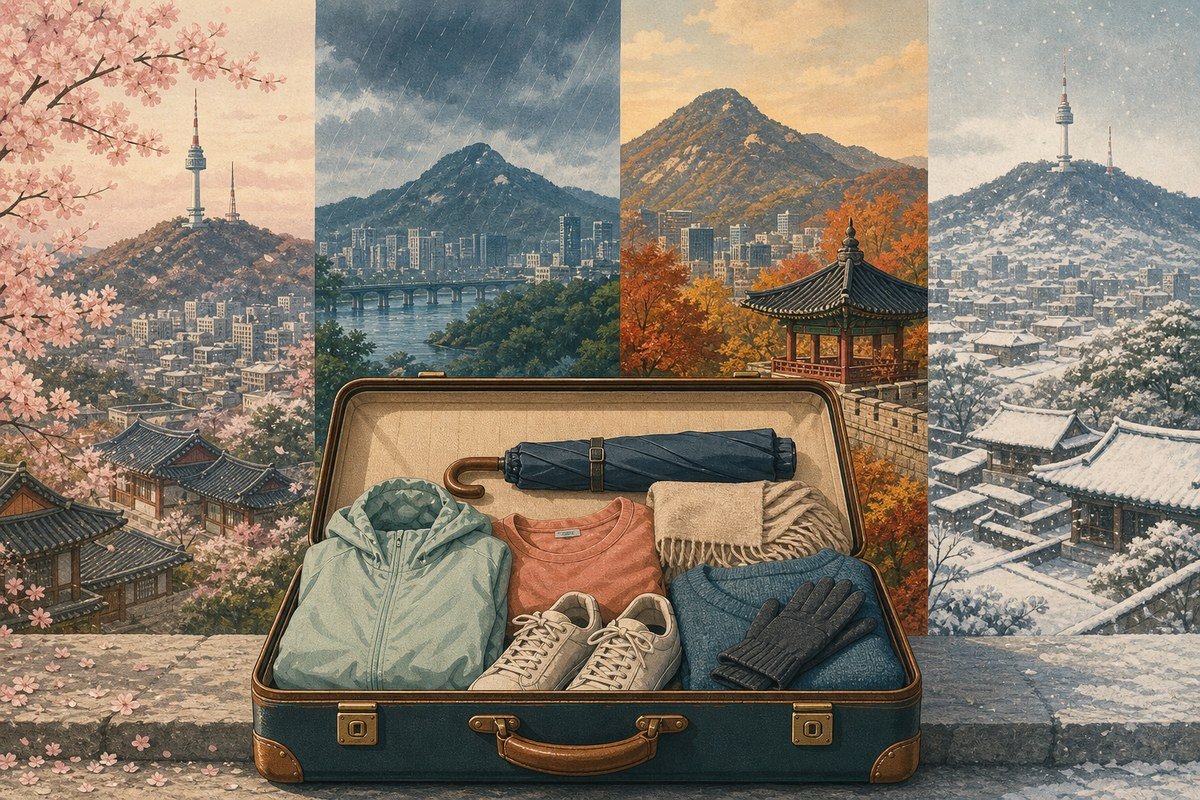
Korea has four distinct seasons, and the difference between a humid August afternoon and a windy January morning can be dramatic. Packing for “mild weather” without checking your exact month is one of the easiest ways to arrive with the wrong clothes.
This guide uses Seoul as the main reference while explaining important differences in Busan, Jeju, mountain areas, and northern inland regions. Climate averages are useful for planning, but check a current forecast shortly before departure because heat waves, cold snaps, heavy rain, and typhoons vary each year.
Korea’s seasons at a glance
- Spring, March to May: changeable temperatures, generally mild afternoons, cool mornings, and occasional poor air quality.
- Summer, June to August: hot, humid, rainy, and sometimes affected by tropical storms.
- Autumn, September to November: warm early in the season, then increasingly cool, dry, and crisp.
- Winter, December to February: cold and dry, with sub-zero temperatures common in Seoul and inland areas.
Southern coastal cities are usually milder in winter than Seoul. Jeju is also relatively mild but can be windy. Mountain destinations may be significantly colder than nearby cities.
January: deep winter
January is typically the coldest month. Seoul mornings can fall well below freezing, and dry wind makes exposed skin feel colder. Snow is possible, although the city is not continuously snow-covered.
Pack: an insulated coat, thermal base layers, sweater, warm socks, gloves, scarf, hat, lip balm, moisturizer, and shoes with decent grip. Indoor heating can be strong, so removable layers are more comfortable than one extremely heavy outfit.
February: cold with early signs of change
February remains winter. Some afternoons feel less severe than January, but cold waves can still arrive suddenly. Lunar New Year travel can also mean longer periods outdoors while waiting for transport.
Pack: essentially the same winter kit as January. Do not replace your coat with a light jacket simply because spring is approaching on the calendar.
March: unpredictable early spring
March can switch between sunny, comfortable afternoons and near-winter mornings. Trees may still look bare early in the month, while spring flowers begin appearing later.
Pack: a medium-weight jacket, knitwear, long trousers, closed shoes, and a light scarf. Bring layers that fit easily into a day bag. A foldable mask can be useful when air-quality advisories are issued.
April: blossoms and large daily temperature swings
April is popular for spring travel. Days are often pleasant, but evenings can cool quickly. Blossom timing changes each year and differs by latitude and elevation.
Pack: a light jacket or trench coat, breathable tops, long trousers, comfortable walking shoes, sunglasses, and a compact umbrella. If you plan early-morning photography or mountain walks, add a warmer layer.
May: warm, bright, and increasingly summery
May often brings warm afternoons without the peak humidity of midsummer. It is one of the easiest months for outdoor travel, although strong sunlight and occasional hot days are possible.
Pack: light shirts, a thin cardigan or jacket, sun protection, comfortable shoes, and a reusable water bottle. Short sleeves work on many afternoons, but keep one outer layer for evenings and air-conditioned spaces.
June: early summer and rising humidity
June begins warm and becomes more humid. The rainy season can start during the latter part of the month, with timing varying by region and year.
Pack: breathable quick-drying clothes, a compact umbrella, light rain jacket, water-resistant shoes or sandals, spare socks, and a waterproof pouch for electronics. Hotel rooms and cafés can feel cool because of air conditioning.
July: rainy, hot, and humid
July commonly overlaps with the summer monsoon period. Rain may arrive in intense bursts rather than as gentle all-day drizzle. High humidity makes clothes dry slowly, and flooded walkways can disrupt plans during severe rain.
Pack: several lightweight quick-drying tops, an umbrella, rain shell, shoes that can handle water, anti-chafing products, and a small towel. Avoid relying on heavy denim, leather shoes, or thick cotton that remains wet.
August: peak heat
August is generally the hottest time of year. Heat, humidity, warm nights, sudden showers, and possible typhoon effects can occur. Long outdoor itineraries require more rest and hydration than visitors often expect.
Pack: loose breathable clothing, strong sun protection, hat, refillable bottle, sweat towel, portable fan, and one light layer for aggressive indoor air conditioning. Schedule palace grounds, hikes, and markets for mornings or evenings when possible.
September: late summer turning to autumn
Early September can still feel like summer, while the end of the month is usually more comfortable. Typhoon-related rain remains possible, particularly in southern and coastal areas.
Pack: summer clothes plus a light jacket, compact umbrella, and closed walking shoes. Check the forecast before coastal trips, ferries, and island itineraries.
October: crisp and comfortable
October is a favorite month for city walks and hiking. Days are often mild and drier, while mornings and nights become cool. Mountain foliage and temperatures change earlier than in central Seoul.
Pack: long sleeves, a light-to-medium jacket, long trousers, and supportive walking shoes. Add a warmer fleece or thin insulated layer for mountain areas and late October.
November: rapid transition toward winter
November begins with late-autumn conditions but can turn cold quickly. Trees lose their leaves, nights lengthen, and winter-style wind becomes more noticeable.
Pack: a warm jacket, sweaters, long trousers, closed shoes, and a scarf. Travelers arriving near the end of November should prepare for temperatures close to freezing in Seoul.
December: cold, dry, and festive
December is full winter, especially in Seoul and inland regions. Outdoor light displays and markets are appealing, but standing still after sunset can feel much colder than walking during the day.
Pack: an insulated coat, thermal layer, gloves, scarf, warm socks, and moisturizing products. For ski resorts or mountain destinations, bring dedicated snow clothing or plan to rent it.
Seoul, Busan, Jeju, and mountain differences
Seoul: hot and humid in summer, cold and dry in winter, with sharp seasonal transitions.
Busan: winter is generally milder than Seoul, but coastal wind can be strong. Summer remains humid and rainy.
Jeju: often milder but exposed to wind and changing coastal weather. Rain and typhoon impacts can be more significant than visitors expect.
Gangwon and mountains: colder conditions, earlier autumn color, more snow potential, and faster changes with elevation. Hiking weather in a city does not guarantee safe mountain conditions.
Rainy season and typhoon planning
Korea’s rainy season generally falls from late June into July, but exact start dates, duration, and rainfall vary. Typhoons are more likely to affect travel from summer into early autumn. A typhoon does not always strike your city directly; its rain and wind can still cancel flights, ferries, hiking routes, and outdoor events.
Do not plan a tightly timed airport transfer immediately after an island flight or ferry during unsettled weather. Keep one indoor alternative for each important day and follow official warnings.
Air quality and seasonal discomfort
Air-quality conditions can change at any time, but fine-dust episodes often receive more attention in the cooler months and spring. Use a current air-quality service rather than assuming every hazy day has the same cause.
Spring pollen, summer heat, humid indoor spaces, and dry winter heating can also affect comfort. Travelers with asthma, allergies, or other medical needs should carry appropriate medication and follow professional advice.
The year-round packing checklist
- Comfortable walking shoes already broken in.
- A compact umbrella.
- One layer for air-conditioned or heated interiors.
- Sun protection in every season.
- A reusable water bottle.
- A small waterproof pouch for passport and electronics.
- Weather and air-quality apps set to your actual destination.
- Travel insurance appropriate for your planned activities.
Common packing mistakes
- Using one national average for Seoul, Busan, Jeju, and mountain areas.
- Bringing only shorts in June or September.
- Underestimating winter wind and dry air.
- Wearing heavy denim and leather shoes during the rainy season.
- Planning summer sightseeing without shade, water, and rest breaks.
- Checking a monthly average but not the forecast before departure.
Related Korea planning guides
- Best SIM Card and eSIM Options for Korea — arrange mobile data before relying on forecast and map apps away from Wi-Fi.
- Essential Apps You Need in Korea — prepare maps, transport, translation, and other everyday tools.
- How to Get from Incheon Airport to Seoul — compare arrival transport options for your luggage, schedule, and weather.
- Emergency Numbers in Korea — save the main contacts before storms, extreme heat, or other travel disruptions.
Official references
For national seasonal guidance and city temperature examples, see the Korea Tourism Organization’s Climate guide. Seoul’s official four-season climate page provides monthly averages, while the Korea Meteorological Administration should be used for current forecasts and warnings.
Bottom line
Pack for your specific month, region, and activities rather than for “Korea” in general. Layers solve most spring and autumn problems; breathable rain-ready clothing is essential in midsummer; and proper insulation matters in winter. Check the forecast again two or three days before departure and adjust your suitcase accordingly.