
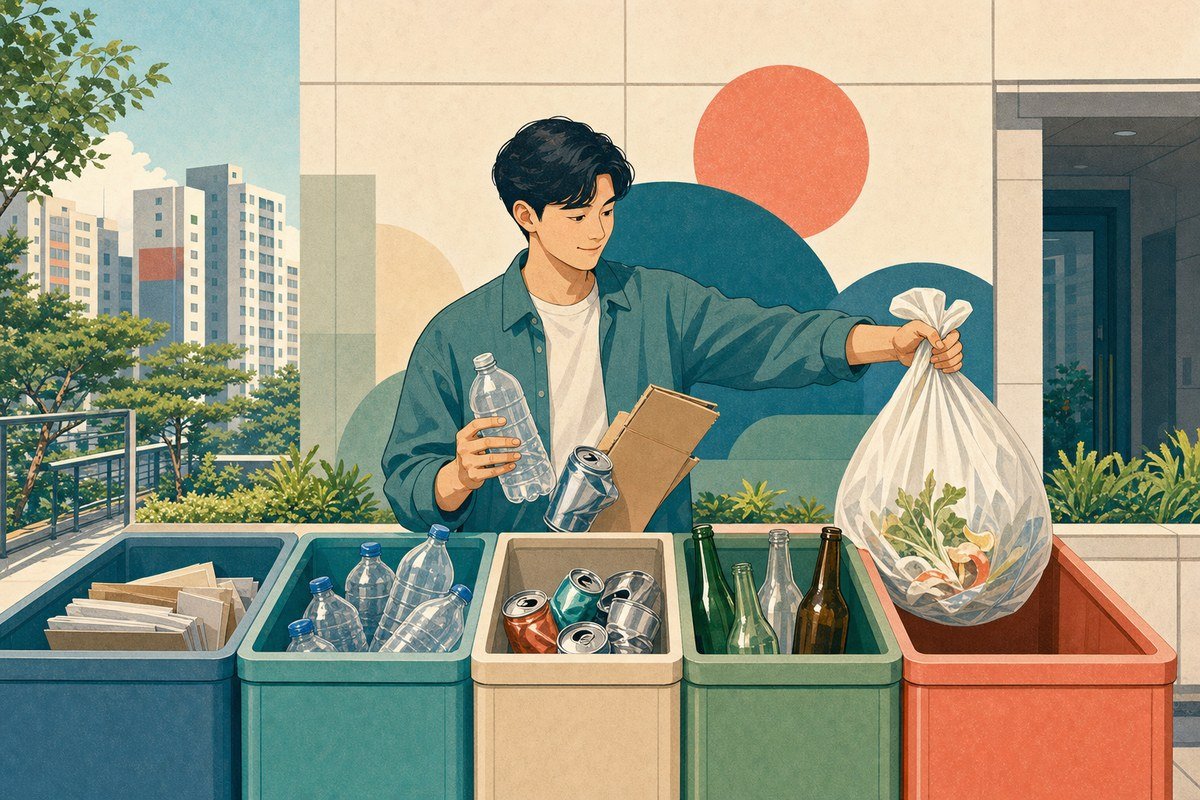
Sorting household waste in Korea can feel complicated because the rules are detailed and collection schedules differ by city, district, building, and neighborhood. The basic system is easier once you separate waste into four groups: general waste, food waste, recyclables, and special or bulky items.
This guide uses Seoul’s official guidance as a practical example. If you live elsewhere in Korea, confirm the exact bag type, collection day, and disposal location with your building manager or local district office.
The four main waste groups
- General waste: non-recyclable household rubbish placed in an official volume-based garbage bag.
- Food waste: accepted food scraps placed in a designated food-waste bag, container, or apartment RFID machine.
- Recyclables: clean, empty materials separated by type, such as paper, cans, glass, and eligible plastics.
- Special waste: batteries, fluorescent lamps, electronics, large furniture, and other items requiring a separate collection method.
Do not place everything in one ordinary shopping bag. Incorrect disposal can lead to refused collection, complaints from neighbors or building management, and possible local penalties.
General waste and official garbage bags
Korea uses a pay-as-you-throw system for most general household waste. Residents buy official volume-based bags, often called standard garbage bags, from local supermarkets or convenience stores. Bag prices and designs vary by district, and a bag purchased in one district may not be accepted in another.
Use general-waste bags for items that cannot be recycled and are not accepted as food waste. Typical examples include contaminated paper, tissues, used hygiene products, broken small household items, animal bones, shellfish shells, onion and garlic skins, tea bags, and large fruit pits.
Tie the bag securely and place it only at your building’s designated collection point and time. In Seoul, disposal days and hours vary by district; collection is commonly scheduled in the evening, but you should never assume the same schedule applies everywhere.
Food waste: what belongs and what does not
Food waste is generally material that can be processed as animal feed or compost. Ordinary meal leftovers, rice, soft vegetable scraps, fruit flesh, and other accepted kitchen scraps usually belong in the food-waste stream.
Remove packaging, bottle caps, toothpicks, disposable cutlery, foil, and plastic before disposal. Drain excess liquid and moisture. Seoul’s guidance also recommends removing dirt and other impurities and reducing very large vegetable pieces.
Some items may look like food but must go into general waste because they are too hard, fibrous, dangerous, or unsuitable for processing. Common examples include:
- Animal bones, feathers, and hair.
- Clam, oyster, crab, lobster, and similar hard shells.
- Eggshells.
- Onion, garlic, ginger, and corn skins or stalks.
- Walnut, chestnut, coconut, and other hard shells.
- Peach, persimmon, apricot, and other large hard fruit seeds.
- Tea bags, tea leaves, medicinal-herb grounds, gum, and toothpicks.
Your building may use dedicated food-waste bags, communal containers, or an RFID machine that weighs the waste and charges a fee. Ask the building manager before choosing a method.
How to prepare recyclables
The safest general rule is: empty, rinse, dry, and separate. Food residue can make an otherwise recyclable item unacceptable.
Paper and cardboard
Flatten boxes and remove plastic tape, shipping labels, and foam inserts when possible. Keep paper dry. Greasy pizza boxes, wet paper, receipts, coated paper, and heavily contaminated packaging may need to go into general waste.
Clear plastic beverage bottles
Empty and rinse the bottle, remove the label, crush it if local instructions request this, and replace the cap if the collection guidance allows. In Seoul, transparent beverage bottles can have a separate collection stream from other plastics, especially in apartment complexes.
Other plastics and vinyl
Check the recycling symbol and local collection rules. Rinse containers and remove food residue. Dirty plastic film, mixed-material products, toys, pens, and items that cannot be separated may be treated as general waste even when they contain plastic.
Glass bottles and metal cans
Empty and rinse bottles and cans. Separate caps when required. Mirrors, ceramics, heat-resistant glass, broken plate glass, and light bulbs do not belong in an ordinary glass-bottle bin. Spray cans and butane canisters require particular care: use the locally designated method and make sure containers are completely empty without creating a fire risk.
Styrofoam
Clean packaging foam may be accepted after tape, labels, and food residue are removed. Dirty takeaway trays and coated or colored foam may not be recyclable in your area.
Batteries, lamps, electronics, and bulky waste
Never place batteries in ordinary garbage or mixed recycling because damaged batteries can cause fires. Apartment buildings, community offices, and some retailers provide dedicated collection boxes for batteries and unbroken fluorescent lamps.
Small electronics may be accepted through an electronics take-back or local collection program. Furniture, mattresses, large appliances, and other bulky items normally require advance registration and a paid disposal sticker or online report. The exact process belongs to your city or district, so check before leaving anything outside.
Where and when to put waste out
Detached homes, villas, and apartment complexes can follow different systems. Apartments usually have a marked recycling area and their own collection schedule. Smaller buildings may require residents to place bags at a specific street-side point after sunset on designated days.
Ask one of these people before your first disposal:
- Your landlord, real-estate agent, or building manager.
- The apartment management office.
- Your district office sanitation department.
- A neighbor who uses the same collection point.
Holiday collection schedules can change. Seoul publishes district-by-district notices during major holidays, which demonstrates why local confirmation matters.
Useful shopping phrase
At a supermarket or convenience store, you can ask for a “standard garbage bag” or show your address and request the correct local bag size. Small bags are useful for short stays, while residents often choose several sizes depending on household needs. Avoid buying a large supply until you know the bags are valid for your district.
Common mistakes to avoid
- Using an ordinary plastic shopping bag for general waste.
- Buying official bags in a different district.
- Putting bones, shells, eggshells, or large fruit pits into food waste.
- Recycling containers that still contain food or liquid.
- Mixing clear beverage bottles with other plastics where separate collection is required.
- Leaving furniture or electronics outside without registration.
- Ignoring the building’s disposal time and collection location.
A simple sorting routine
- Keep a small container or bag for drained food scraps.
- Keep clean paper, plastic, cans, and glass separate from general waste.
- Rinse recyclable packaging shortly after use so residue does not dry.
- Store batteries and lamps safely until you find a dedicated collection box.
- Check the building schedule before taking anything outside.
Related everyday guides
- Korean Convenience Stores: What to Buy, How to Pay, and Useful Services — learn what stores offer and ask staff where to buy the correct local garbage bags.
- Korean Convenience Store Food — plan simple meals and recognize the packaging that must be emptied and sorted afterward.
- How to Order Food in Korea Without Speaking Korean — understand ordering options and deal with leftover food and delivery packaging correctly.
Official references
For Seoul-specific rules, see the Seoul Metropolitan Government’s Living in Seoul guide, its food-waste disposal standard, and its guidance on separating clear plastic bottles. Local rules may change, so treat your building and district instructions as the final authority.
Bottom line
Start with four groups: general waste, food waste, clean recyclables, and special items. Buy the correct district bag, drain food scraps, rinse recyclables, and follow your building’s collection schedule. A two-minute check with the management office can prevent the most common and expensive mistakes.