
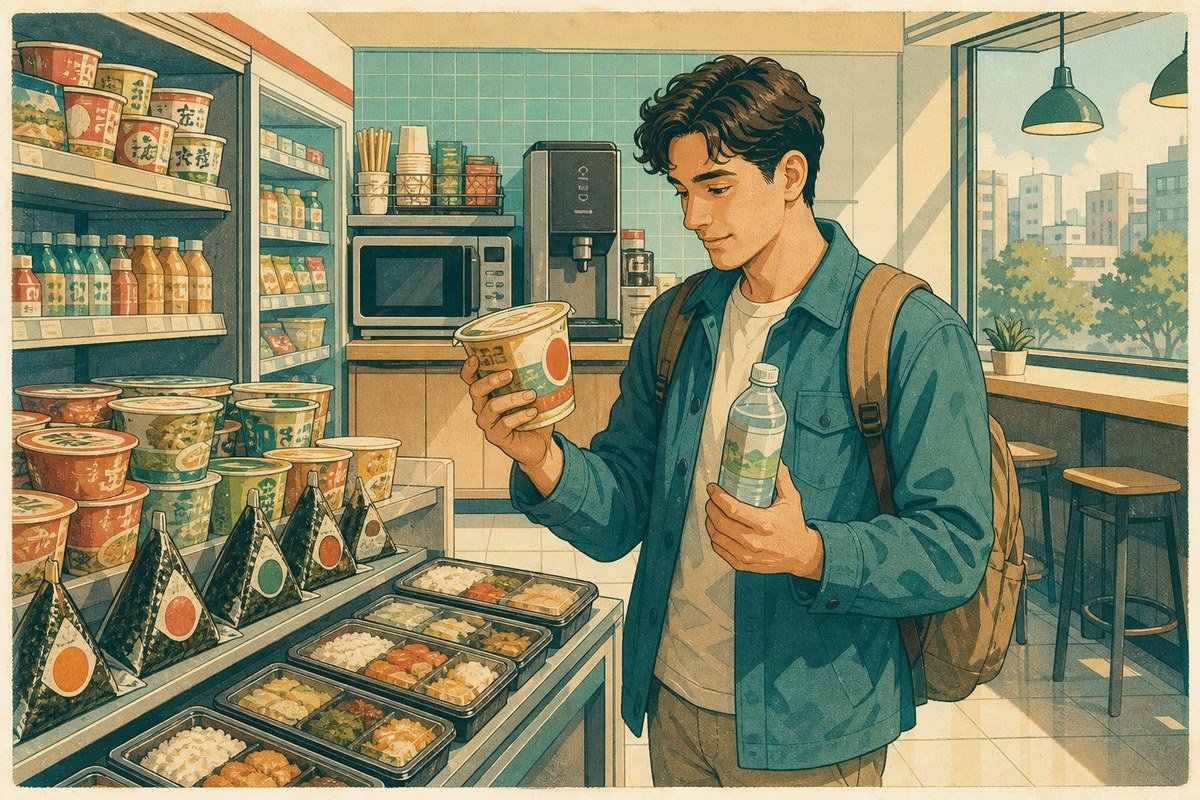
Korean convenience stores make it easy to assemble a quick breakfast, light lunch, late-night meal, or train snack without ordering in Korean. The challenge is not finding food—it is choosing items that work well together from crowded shelves.
This guide focuses only on practical food combinations. For payment, promotions, transportation-card top-ups, ATMs, and other store services, use our separate complete Korean convenience store guide.
How to build a simple convenience-store meal
A balanced quick meal usually needs three parts: a main source of carbohydrates, something with protein, and a drink or lighter side. In practice, that might mean rice plus eggs and water, a sandwich plus yogurt and fruit, or noodles plus a small rice item.
You do not need to copy a viral combination exactly. Products change frequently, and popular items can sell out. Use the combinations below as flexible templates and choose similar products that fit your appetite, budget, and dietary needs.
1. Samgak gimbap and a mild cup soup
Samgak gimbap is a triangular rice snack wrapped in seaweed. Common fillings include tuna mayonnaise, bulgogi, kimchi, and spicy chicken. Pairing one or two pieces with a small cup soup makes a warm, inexpensive meal that is easier to finish than a large lunch box.
The wrapper normally has numbered tabs. Follow them in order so the seaweed stays separate until you are ready to eat. If you dislike spicy food, check the filling with a camera translation app instead of relying only on the package color.
2. Cup noodles and samgak gimbap
This is one of the best-known convenience-store combinations. The noodles provide a hot, filling base, while the rice makes the meal more substantial. Korea Tourism Organization food guidance also describes cup noodles with samgak gimbap as a classic pairing.
Choose a smaller noodle cup if you are also eating rice. Many noodle products are much spicier than visitors expect, so look for plain udon, mild broth, or less intense flavors when you are uncertain. Add only part of the seasoning packet if sodium or heat is a concern.
3. Dosirak lunch box and a small side dish
A dosirak is a prepared lunch box, usually with rice and several side dishes. It can be the easiest complete meal when you want variety without selecting several separate packages. Korea Tourism Organization coverage identifies lunch boxes as a major part of Korean convenience-store food culture.
Choose a fresh package with a clearly visible use-by time and check the microwave instructions. A small container of kimchi, seaweed, or salad can add contrast, but the lunch box may already contain enough sides. Start with the meal by itself before adding extras.
4. Packaged gimbap, eggs, and water
A roll of packaged gimbap with one or two cooked eggs is a practical breakfast or travel-day lunch. It requires little preparation, has no broth to spill, and fits easily into a train-station routine.
Gimbap fillings vary widely. A vegetable-looking roll can still contain ham, fish cake, egg, or seafood seasoning. Read the label carefully if you follow a vegetarian, halal, or allergy-sensitive diet.
5. Salad, chicken, and a rice item
Some larger branches carry packaged salads, chicken breast, cooked eggs, tofu products, and small rice portions. Combining a salad with a protein item and samgak gimbap can make a lighter meal than noodles or a full lunch box.
Dressings may contain dairy, egg, sesame, soy, or seafood ingredients. Chicken products can be sweet, spicy, smoked, or strongly seasoned, so check the front label and allergen information before buying.
6. Sandwich, yogurt, and fruit
A sandwich with yogurt and a fruit cup is an easy breakfast for travelers who do not want spicy or hot food in the morning. Larger stores near offices and transport hubs often have the widest refrigerated selection, but availability changes throughout the day.
Check the use-by time on every chilled product. Do not buy refrigerated food early and leave it in a warm bag for many hours. If you are carrying breakfast for later, store it in a hotel refrigerator as soon as possible.
7. Bread, milk, and coffee
Korean convenience stores carry filled breads, roll cakes, pastries, milk drinks, and canned or bottled coffee. A bread-and-drink combination works well as a small breakfast or afternoon snack rather than a full meal.
Filled bread can contain cream, red bean paste, custard, fruit, cheese, or savory ingredients. Sweet products may look similar from the outside, so translate the label before choosing. If you buy a large dessert, consider sharing it instead of treating it as one serving.
8. Tteokbokki and a cooling side
Packaged tteokbokki offers chewy rice cakes in a sauce that is often sweet and spicy. A mild drink, cooked egg, cheese, or plain rice item can soften the experience. Do not assume that cheese makes an extremely spicy sauce mild enough for everyone.
Follow the preparation steps exactly because some packages require adding water before microwaving. Remove all non-microwave-safe lids, films, or seasoning packets as instructed. If the package is unclear, ask the cashier before heating it.
9. Cup noodles with egg or cheese
Adding a cooked egg or a slice of cheese can make cup noodles feel more complete. Cheese changes the flavor and texture, while an egg adds protein without requiring another large item.
Use only ready-to-eat eggs unless the store has equipment and instructions specifically designed for cooking raw ingredients. Do not place a whole egg in a microwave. Add cheese after the noodles are hot so it softens without creating extra mess.
10. A late-night snack set
For a hotel snack, choose one salty item, one small sweet item, and a non-alcoholic drink. Seaweed, nuts, crackers, popcorn, chocolate, or a small cake are easier to manage than buying several large bags because of a promotion.
Products promoted as 1+1 or 2+1 can be good value only if you actually need the quantity. Bring all qualifying items to the register, but do not let a promotion turn a simple snack into unnecessary food waste.
How to use the microwave and hot-water station
Always pay before opening or heating food. Heating instructions are usually printed on the package, often with different times for different microwave power levels. Remove foil, metal, sauce packets, and any lid section marked for removal.
For cup noodles, add the included seasoning as directed and fill only to the marked water line. Some products use hot water, while others are designed for a microwave or a dedicated noodle cooker. The package instructions take priority.
After eating, follow the store’s waste labels. Leftover broth, food waste, containers, and general trash may have separate openings. If no eating area is provided, take the unopened purchase with you rather than using staff-only space.
Spice levels and unfamiliar flavors
Package colors are not a reliable spice scale. Red and flame graphics often indicate heat, but some mild products also use bold designs. Search the exact product name with a translation app or ask a companion when spice tolerance matters.
Start with mild broth, plain rice, eggs, sandwiches, yogurt, fruit, or familiar snacks on your first visit. You can try stronger flavors later without making your first meal difficult.
Allergies and dietary restrictions
Convenience-store food can contain pork, beef, chicken, shellfish, fish sauce, milk, egg, wheat, soy, sesame, peanuts, or other allergens that are not obvious from the photo. Shared production facilities can also create cross-contact risks.
A camera translation tool is useful for general understanding, but it is not enough for a severe allergy. Choose products with clear labeling, carry a translated allergy card, and avoid uncertain prepared food when the consequence of a mistake is serious.
Labels such as vegetable, salad, or tuna do not guarantee that an item is vegan, halal, gluten-free, or free of seafood seasoning. Check the ingredient panel rather than making a decision from the main product name.
Freshness and food safety
Refrigerated meals have a date and time printed on the package. Choose items well within that period and return them to refrigeration promptly if you are not eating immediately. Do not leave rice, meat, dairy, eggs, or prepared sandwiches in a warm room or bag for an extended period.
If packaging is swollen, leaking, damaged, or already open, choose another item and tell the cashier. Heat food thoroughly according to the manufacturer’s directions and eat it soon after preparation.
A practical first visit
- Decide whether you want a meal, breakfast, or snack before browsing.
- Choose one main item such as rice, noodles, a lunch box, or a sandwich.
- Add one protein or lighter side only if needed.
- Select water or another drink.
- Check the use-by time, ingredients, and heating instructions.
- Pay before opening anything.
- Prepare the food and sort the waste according to the branch signs.
This approach is simpler than buying several viral products at once. It also helps keep the meal affordable and reduces waste.
Official references
- Korea Tourism Organization: Keeping Up with the Convenience Stores in Korea
- Korea Tourism Organization: Popular Items in Korean Convenience Store
- Korea Tourism Organization: Convenience Store Must-Eats
Last reviewed: July 2026. Products, prices, promotions, ingredients, and branch facilities can change.